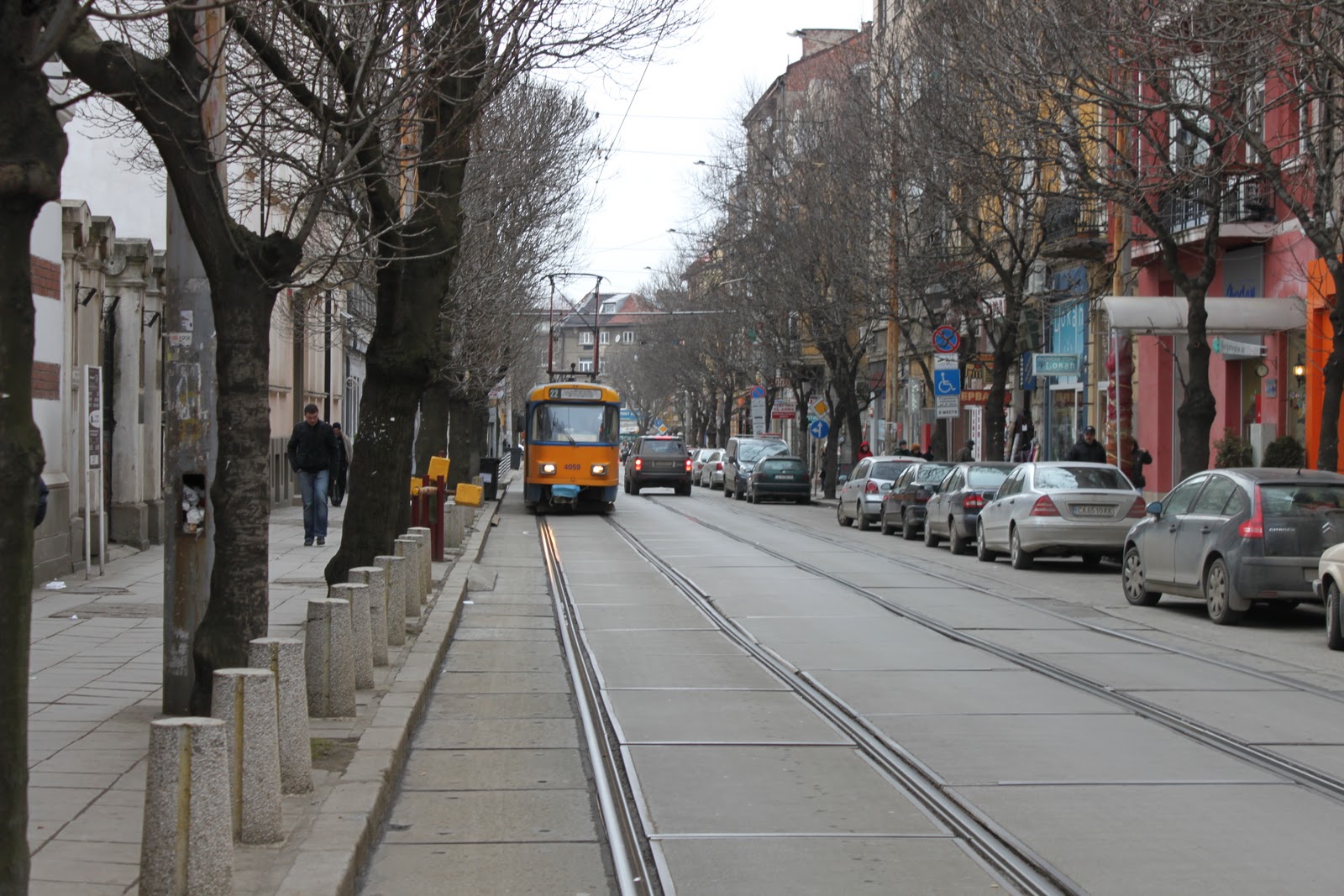
Wednesday, 9 March 2011

cinetrip.

Budapest tends to be well known for the Buda Castle, the Citadel, the Hungarian Parliament, Goulash and many more things in between. Also (for those historians in the audience), in 1956, the city (and the world for that matter) witnessed what has been popularly been known as the Budapest Uprising (also the Hungarian Revolution) and which saw a nationwide uprising against the Soviet occupation (or rather "protection") of Hungary which had lasted since the 1945 liberation. When one thinks of Budapest, one can also quickly associate the name with the natural thermal baths that are spread across the city and which tend to be a prime tourist hotspot. Here the typical activity is to spend a few hours going around a labyrinth of cold pools, turkish baths, outdoor spas, saunas, and so on. It is also a popular thing with most locals.  In addition to being a favourite day-time activity, from time to time (about once a month if I am not mistaken), some baths house gigantic rave parties, known as cinetrip. As one can expect, these take place throughout the bath premises, in pitch darkness, with house music rocking the sound systems and laser effects (and even some live performances) providing the rather limited lighting. Then, of course, numerous bars are set up across the baths so people can carry on, drink and enjoy a fun night out. I was fortunate enough that the hostel I stayed at (again, publicity is a must as it was an awesome place - http://www.carpenoctemhostel.com/) was organising an outing to one of these events the first night I was in Budapest. So, after a day packed with sightseeing and hundreds of photo shots I joined my fellow hostel buddies as well as the hostel staff at this prime prime venue. Will leave you with a video that was shot back in c. 2008 but at least like that you get a sense of what it was like (http://www.youtube.com/watch?v=KEqQA-IdiAk).

In any event, I got to Budapest after a record-breaking 17 hour overnight train ride from Budapest which I mostly spent sleeping and reading. I am almost through Malcom X's autobiography by the way. I think my thoughts on the book alone are worthy of a post, so will save any commentary on it for a another time. I got to into the city at Keleti train station quite early and walked for under 40 minutes to get to my hostel. After the customary sign-in procedures and getting introduced to some of the hostel staff - which by the way was (did I say it already) awesome! Super friendly guys, extremely welcoming and with a thrive to make everyone's stay in Budapest, regardless of the purpose of each one's visit, as fun and as fulfilling as possible. So, once again, kudos to them!  - I hit the streets of Budapest. I am really glad I spent 2 days there (one of the only places where I have stayed more than a day or more than 36 hours) because the city is rather big (don't get me wrong though, nothing like Madrid, London or NYC) and there are dozens of sights and cool things to see. For instance, the first day I visited the Hungarian Parliament (pic below) which was absolutely stunning. Turns out they do guided tours and signed up for one of them. It is quite convenient for us EU + Swiss nationals as the tours is free. For other nationalities there is a c. 20eur price tag. Ludicrous! I did ask the lady at the ticket booth why this was the case and her answer seemed to make complete sense to her while she gave me a rather puzzled look, that I interpreted as: "why in the hell would you be asking that question, doesn't it seem obvious?" And the answer was that given that Hungary was an EU member, EU (+ Swiss - lucky them) could benefit from free access. Rather weird if you ask me... And so I continued visiting the city, mostly the Pest side during my first day. I saved the castle and the old town of Buda for the second day. After a rather shocking early wake-up (c. 10am) after the cinetrip outing (see above), I showered, took my gear (camera, laptop, map, gloves + scarf (!!!), etc. and headed to the Buda side. The sights from the castle are absolutely amazing. Some pictures are below for you. UNESCO world heritage sight since the 1970's (I think...) I managed to take a lot of pictures while the sun was setting, which are particularly beautiful. Overall, the city was amazing. It reminded me a bit of Paris, particularly the Pest side, with its wide boulevards (Andrassy Boulevard is particularly nice and also a UNESCO sight since the early 2000's - famous for its devotion to "Haute Couture"), its imposing "squares" and the parks (i.e. Budapest City Park - http://www.budapest-tourist-guide.com/budapest-city-park.html). And then the Buda side is like a medieval old town, nesting on top of a hill and overlooking the whole city - one of the most amazing views I have ever been exposed to. Wandering the empty, narrow, winding and stone-paved streets on the way up to the castle also provided great potential for "photo opps" :)  No real ifs and buts to be honest, only that it was a bit cold as there was a great deal of wind blowing across the city. That didn't stop me from exploring about every corner of the city!

And now I am in Vienna for the day (after spending yesterday in Bratislava). Catching a night-train to Krakow to visit the last country of this SEE/CEE tournée (sorry... was taking for granted the investment banking terminology here, which I am sure not all of you are familiar with... SEE = South Eastern Europe and CEE = Central and Eastern Europe).

Will keep you posted with more news in the next few days. Until then, enjoy the pics and be happy!

pv


Tuesday, 8 March 2011

the dogs of bucharest.

Some of you may have heard about Henning Mankell, or even read some of his literature. For those of you who have not, he is Swedish and writes crime novels in a style which is very much a proxy to Stieg Larsson's, who seems to be rather more "en vogue" these days following the screenplay adaptation of his Millennium Trilogy. I was once lent a book by a very special someone written by Mankell and called "The Dogs of Riga", set in Riga (Latvia) and which illustrates the unstable political climate of former Soviet republics in the 1990s following their independence while criticising the legacy of corruption and repression left on these countries by the Soviet socio-political influence. Not that it has much to do with what I did or saw in Bucharest but the title of this great novel (which I read in c. 2007) inspired the title of my post and thought I had to pay a small tribute to this fantastic contemporary novelist (http://www.henningmankell.com/).

So why the title of this post then? Turns out Bucharest is famous (even notoriously so in the past) for the many stray dogs wandering the streets, living in parks and putting the traffic on the main roads and boulevards slightly at risk with their "random walks" (quick ref. here to B. Malkiel and his work). Nevertheless, these dogs don't tend to be dangerous as they're mostly "doing their own thing" ... as a matter of precaution though, one just ought to avoid them (you never know!). Travelling by ones self is really not the ideal scenario for a rabies-infected dog bite. It just surprised me how this was a phenomenon in Bucharest and no other capitals of Southern and Eastern Eastern Europe and the Balkans. Apparently, the population of stray dogs in Bucharest totals c. 1 million (although this figure is thought to be rapidly declining over the years) and is, in part, explained by Ceausescus' urban development planning of Bucharest, which led to many inhabitants moving to newly-developed housing estates where they could not have dogs. They thus left them on the streets. Decades and natural mammal reproduction must explain the build-up to today's landscape.

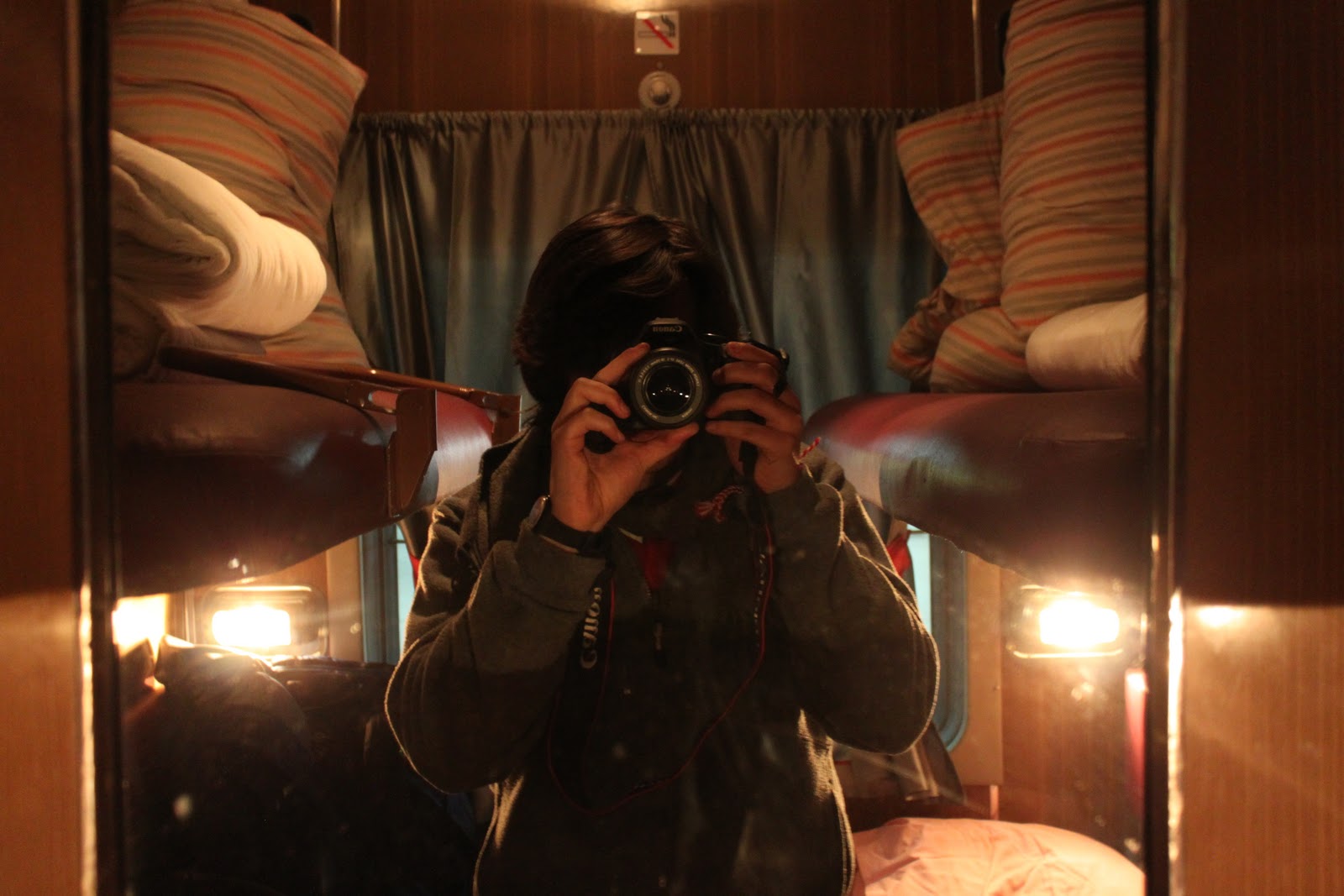
As I mentioned in my previous post on Sofia, I took the night train over to Bucharest. I was initially meant to stay the night in Bucharest as I had planned to leave Sofia in the morning. But the rakia effect inevitably made me miss my train (I did get to the train station on time - well 1 or 2 minutes late) and had another day in Sofia until the night train departed to Bucharest. The train was actually departing from Sofia and going all the way to Kiev and Moscow. I managed to be placed in a 4-person cabin which I had all to myself for the whole trip (I have shared some pics below of the cool compartment I had all to myself). Turned out to be one of the best sleeps I have had so far on this trip. A solid 8 hours sleep, only interrupted by customs/border/ticket control at c. 3am upon entering Romania, and was all rested up to visit Bucharest. Given that I have a certain itinerary to follow (albeit flexible, I still had plenty to see and do before flying out of Warsaw on 13 March) I could not afford to spend the night. Nevertheless, arriving at 6am gave me over 12 hours to see the city before I hoped on the train to Budapest at c. 7pm that same day. I left my big backpack in the baggage check at the train station and Canon in hand started walking around the city. It was rather early and bit chillier than Sofia and the precedent countries I had visited. Reminded me of Belgrade in that sense. Must have been a good -5C for most of the day, but with gloves, scarf and hat... "impossible is nothing" (thanks adidas - TM) at this point. The city has a population of c. 2m and his, by far, the largest of the cities I had visited until then. It was very much an exhausting day but well worth it in the end. Took plenty of pictures and had a great time. I was particularly surprised by the blend of architecture styles on display across the city. As with many of the Balkan and SEE/CEE countries one can feel the heritage of different time periods, cultural influences and, for that matter, political "orientation". Romania, in particular, had a rather oppressive regime in the 1965-1989 time period under the leadership of Ceausescu. Like many contemporary despots, he aimed to highlight the cult to his personality by "leaving a mark" on the country. This, at the time, was well accomplished by his megalomaniac urban policy, which lead him to reconstruct many parts of the city of Bucharest. The clearest illustration could be the mammoth he built in downtown Bucharest (see pic below), designed in a Soviet-like style and which now houses the Romanian parliament, and the wide boulevard leading up to it which, some people argue, he designed to replicate the Champs Elysees in Paris. As with Sofia (and I as discussed in my previous post), one could notice the vibe present in Bucharest, in particular since the EU accession in 2007. Overall, I only miss not having spent the night to discover a bit more and enjoy the night "ambiance". I had to continue my travels, this time heading to Budapest (Hungary), where I was planning to stay for 2 nights and 2 days.

By the way, did you know that Bucharest has its very own Arc de Triomphe (Arcul de Triumf) which is very similar in size and design to the one in Paris and which was erected in 1922 as a memorial to the Romanian soldiers who had lost their lives during WWI? Also, did you know that it was first built out of wood and the current granite structure was erected in 1935? Pics below!

Until my post re. Budapest (which, believe me, you won't want to miss!), I will leave you with some visuals of Bucharest. Now time to enjoy Bratislava. Stay tuned for further updates.


pv


Sunday, 6 March 2011

rakia.

... You, most certainly, don't know what this word means right? Well, as so many things before embarking on this trip, neither did I... It refers nothing more and nothing less to one of the most popular (and by popular I do mean the proper meaning - i.e. of the people) alcoholic beverages of the Balkan region. It is a strong liqueur (I don't like to spell liquor...), in many instances home-made, which is considered as the national drink of many countries in the region. Bulgaria is particularly well-known for its rakia and one can seem to find it anywhere. If I may use the simple analogy, it is like vodka for Russians or Rhum for the Dominicans/Cubans. That kind of thing. Taste-wise, it is (at least according to my taste buds) similar to amaretto (http://en.wikipedia.org/wiki/Amaretto) but with a slightly bitter after taste which gives an additional "punch" (so to speak...). I found that in Bulgaria everyone seems to enjoy rakia, whether day or night and really regardless of the context, one could well have it alongside a coffee in the morning, after a heavy lunch or even in a bar as a "shot". Although it is also a drink which is present in the national culinary spectrum of various countries I had visited before getting to Bulgaria (e.g. Serbia and Macedonia), it was not until my time in Sofia that I caught a brief glimpse of its well-though-of reputation and, quite honestly, of its taste as I did manage to have a decent amount of it.

Sorry for the random prelude but I always like to provide some perspective as to what comes next. Thus back to the story... So after spending the entire night on the train from Skopje to Sofia, I finally made it at c. 9am. A rise and shine kind of thing which, in any event, always turns out for the best and gives one plenty of energy to walk the streets and explore. I had directions to my hostel in a friendly and welcoming email I had received from the staff a few days earlier, and managed to get there in just under 45 minutes, which even if it may not appear so at face value... is quite a decent walk when one has to carry the two backpacks I have with me. Again, just putting things into perspective ;) So after getting to the hostel which, by the way, was so fantastic that I will give them some publicity on this web 2.0 medium - they totally deserve it (http://www.hostelmostel.com/), I left my bags in the baggage room (as my spot in the dorm room was not yet ready) and spent c. 1 hour revitalising, blogging and resting. While I was in the middle of my post, the lady (she must have been in her 40's) approached me and asked: "Hi, sorry to interrupt and ask this but would you by any chance work for Bank of America?". I was rather puzzled by the question but quickly figured that my backpack is BofA Merrill Lynch branded (I got it this summer as a present for being such an awesome teaching assistant at the analyst training program!). I did tell that I used to work for "Merrill Lynch" without giving too many hints or details but she suddenly began rambling on an on regarding how, as "her" bank, BofA charged her "X" commission every time she withdrew cash at an ATM abroad, how she had to pay "Y" for the transactions billed on her credit card in a foreign (i.e. non-USD) currency... and so on! Fascinating conversation (unilateral at this point) in which I could but smile back at her.

Following that anecdote and after having had some other tastes of the very friendly atmosphere I found in the hostel, I mostly walked around the city. Given its relative size, Sofia can be explored in about one day. After having spent almost two weeks in the Balkans and after having visited countries such as BiH, Montenegro and FYROM in that time, one could tell walking around the streets of Sofia that one was entering the EU, for it has a flair that is not present in any of the Balkan countries. Culturally and historically rich, Bulgaria joined the EU on 1 January 2007 (alongside neighbouring Romania) and after 12 years of negotiations and monitoring since the country submitted its EU membership application. In just over 4 years, one can tell that it has embraced the EU in the most comprehensive of ways. Bulgarians, as I did not necessarily fully perceive in other Balkan countries, are extremely open and are always welcome to questions, queries and conversations. In addition, many Bulgarians (at least in the large metropolitan areas) speak English, more so the younger generations. Another, in my humble opinion, very good indicator of progress, development and cultural openness. One of the things that most impressed me from Sofia was the Alexander Nevsky Cathedral (http://en.wikipedia.org/wiki/Alexander_Nevsky_Cathedral,_Sofia) - pic below - which is right in the middle of the city and is one of the largest Eastern Orthodox Cathedrals in the world. It is absolutely gigantic. In addition, the boulevard leading up to the cathedral is quite long and wide, thus providing a breathtaking "entrée". After spending most of the day visiting the city (this time, unfortunately, I did not visit any museums) I returned to the hostel at c. 6pm. I had been told that every day the hostel staff organised a free dinner + beers in the common room for all the guests. I thought it would be a great idea to meet my fellow hostel mates as well as to mingle with the crowd. Nevertheless, upon returning to my dorm I met a very friendly Australian girl (who, like me, was on the road - she had been travelling for some more time though. c. 5 months already) who mentioned she was planning on having dinner at a typical Bulgarian restaurant with another two people from the hostel that she had met that morning. Two Australians, a Brit and a Spaniard ended up at a fine (and stunningly cheap) local restaurant where we could savour plenty of traditional delicatessen, get through two bottles of wine and enjoy the live folklore music that was being played by the band in the restaurant. Absolutely phenomenal treat which we followed up at a nearby bar, where we met the rest of the hostel lot, with considerable amounts of rakia and other spirits. Very fine individuals I met in Sofia. We had a great time indeed and I wish I could have stayed a bit longer to enjoy what was on the agenda the next day - skiing at the local slopes (which apparently were under 25 minutes away from city centre!). Yes, Sofia has a few ski resorts very close to downtown and is a very popular local attraction. Much more attractive in any event for us Western Europeans who are used to paying 2x or 3x as much for a ski pass. I wouldn't surprise me if, in the next few years, countries like Bulgaria begin to attract European ski aficionados who refuse to pay the ludicrous prices one is subject to in the Alps or the Pyrenees.

Nonetheless, I had to continue my voyages and had to hit the road the next morning, with under 4 hours of sleep and a slight headache (from rakia, really? what do you think?) as Romania awaited. Stay tuned for more updates. Enjoy the pics from Sofia!

Oh yes... forgot to say, I am in Budapest at the moment. Breathing and loving this fabulous city! Won't give too much away though. ;) Gotta keep on reading...

As has become a tradition, fun fact of the day and interesting piece of knowledge regarding Bulgaria and, in particular, the Bulgarian language. The Cyrillic alphabet, used in Bulgaria and in certain other Balkan countries such as Macedonia and Serbia (as well as, probably more commonly known, in Russia), contrary to popular belief was actually developed in Bulgaria in the 10th Century AD... and not in Russia. For a cool map illustrating where the Cyrillic alphabet is used nowadays, here is a link you might want to check out (http://en.wikipedia.org/wiki/File:Cyrillic_alphabet_world_distribution.svg).

pv


Friday, 4 March 2011

what's in a name?

Writing from a Mc Café (which has, by the way, become my best way to access the internet via their free wifi network - well, it costs me a coke to access!) in Bucharest, just wanted to give you a brief download on my visit to FYROM (Former Yugoslav Republic of Macedonia) and what better way to start than by giving a short intro on the country and, in particular, its name. As most former Yugoslav republics (e.g. Slovenia, Croatia, etc.), Macedonia gained its independence in the early 90's (1991 to be precise). Prior to this, and within the broader geo-political context of the Yugoslav Federation, it was called Republic of Macedonia. Turns out, as has been the case in may of the bilateral and multilateral relations amongst countries in the Balkans, that the controversy over its name post independence is a direct result of a political dispute with neighbouring Greece (which has been ongoing since Macedonia's independence). The latter opposes the term Macedonia and Macedonian to refer to both country and citizens due to the ambiguity it generates as the northern region of Greece (and bordering with FYROM - Thessalonika being the most relevant city) is also called Macedonia. Therefore, and while negotiations continue to progress related to the future name of the country, the "temporary" (note the inverted comas!) name since its independence has become FYROM. Moreover, the country is referred to under that name at the international level and in multilateral bodies (e.g. UN, WTO, etc.) where Greece is also a member.

And so I left Belgrade at 9pm on Monday night, on what would be a c. 11hour train ride to Skopje, the capital of Macedonia. Before departing a buddy of mine from the Netherlands/Bulgaria gave some tips on places to visit in the country. Being almost a local (at least of the region - Southern Balkans) I trusted his advice (as was later confirmed by some locals I spoke to). He recommended I spent some time in Lake Ohrid (in the South Western part of the country and on the border with Albania - http://en.wikipedia.org/wiki/Lake_Ohrid). Unfortunately, given my "time constraints", I only had time to visit Skopje, and I didn't even spend the night there...

The train ride was usual enough... managed to get on a direct train which was good (versus what I had to go to get to Sofia). I managed to get some "ok-ish" sleep in the first instances of the trip (i.e. on the Serbian part), but upon crossing the Serbia/FYROM border at c. 3am, for some weird reason the heating went off in the 2nd class cabins/compartments. This, in turn, made sleeping quite difficult... It wasn't until 5am when I got a bit fed up and decided to wander around the train to see if there was any place where I could find a heated compartment. I went down to the 1st class train, which in these routes tends to be empty, and believe it or not... they had heating. Stayed in there with my fellow Macedonian travel partner from 2nds class (told him as I could notice he was also having a hard time in spite of being a local and maybe having been used to this) until we arrived in Skopje at c. 8am. From the train station, I went directly to the central part of the city. First impression was that the whole city seemed to be under construction, but a stalled one... which seemed to have been going on since the 1950's. In all fairness, Skopje reminded me a bit of Sarajevo, in the sense that it appears to be one of the least developed cities/regions in the Balkan region. Unlike Sarajevo, where one could tell that the "backwardness" of the city was due entirely to decades of military strife and human destruction, Skopje's seems to be a direct product of the lack of and organised political Macedonian entity (in reality, prior to its Republic status in Tito's Yugoslavia, the country had always been under the influence of its current neighbours - Greece, Bulgaria and Albania - and the country had historically been divided up amongst them for that matter) as well as to the limited emphasis placed by Tito's Yugoslavia on its development, as it was rather regarded as a "rural" Republic and as not being a "priority". In addition, in 1963 the country, and Skopje in particular was hit by an earthquake which devastated most of the city and many of its most relevant infrastructures were shed to pieces. In any event, culturally (as per the legacy left by the historical prevalence of many different ethnicities) it is one of the richest cities in the Balkans. The city is split in two by the Vardar river. On the northern side, one can find the Bazaar (part of the Ottoman legacy), which was most definitely one of the highlights of my visit and the Kale fortress (which today is used as a military building), where upon climbing to the very top hill and after attempting to enter (before I knew it wasn't a tourist sight one could technically visit) was asked for my passport by a Macedonian soldier and subject to a long list of question related to why I was at that particular spot...  Could still take some decent pics of the city from the top of the hill even if I was unable to enter the fortress (in my opinion, a bit shameful that a historic spot like that, built in the 6th century AD under Roman influence, would today serve as a military base). The southern side is the more modern one, with more of a vibe, pedestrian streets, plenty of cafes. Skopje does, unfortunately, not have too many museums one can see. I did check out the City of Skoje museum which was in the central part of the city. Also, one of the big "attractions" in the city is that Mother Teresa of Calcutta was born in the city in 1910 under the name of Agnes Gonxha Bojaxhiu, to parents of Albanian ethnicity. The house in which she was born has long disappeared, but on the the same grounds, a memorial museum and chapel were built (there is a picture below for the curious ones). She did not spend too much time in Skopje as she left for Ireland aged 18 and to India a year later. The museum is rather small and has limited displays but is interesting (particularly for me, as I had no idea a renowned world figure such as her - independently from her religious activity - was from such a remote city as Skopje). I spent the rest of the day exploring the rest of the city, which is under great construction works within the context of a urban development project, Skopje 2014, which is aimed to modernise most of the city centre with new buildings and infrastructure.

From Skopje I took the night train to Sofia, Bulgaria. In this case, it was not direct as I had to go to Nis (Serbia) and after a c. 1 hour layover take another train (at 3am) to Sofia. The interesting thing about this journey happened in the first part (Skopje-Nis), as I shared my 6-person compartment with a Serbian Gypsy couple. Maybe that was already unique enough, but it turned out that the man spoke "decent" Italian as he had spent some time there in the past. With my also "decent" Italian, we managed to maintain a lengthy and fluid conversation on all sorts of topics. Surely one of the highlights of my trip thus far... and positively surprising in the sense that I was able to communicate + gain local insights, etc. from someone who, a priori, I would have least expected.

I arrived to Sofia early in the morning... more fun stuff awaits so please read on! In the meantime, enjoy the pics!

pv


Wednesday, 2 March 2011

silicon valley.

So turns out that this term not only refers to the southern part of the Frisco bay area and to the home of some of the world's main tech and dotcom companies, but it is also commonly used to describe a part (block or couple of streets) in downtown Belgrade. The term does not, as in the case of its American counterpart, refer to any components used in the manufacturing process of chips and other tech hardware but rather for the plastic used by many of Belgrade's bimbos to "boost" up their physical attributes... It is also a common hangout area for the local tainted Mercedes-Benz squad. If you've ever been to Moscow, you can just about imagine what I am referring to. Travelling by one's self has the advantage, albeit granted my rather latin looks - more so even with this little mustachio which grows naturally as I refrain from shaving for more than 1/2 weeks -, of enabling a certain camouflage around the local crowd, it gives the possibility of cruising in a rather "in cognito" fashion. In spite of this, my touring of the Serbian Silicon Valley was limited to just going around the block, peaking in to one or two places to check out the crowd... but not much more, although the hostel manager did recommend the "area" as one of the main attractions the city of Belgrade had to offer.

Casual anecdotes aside, I got into Belgrade at c. 7am after spending the night on a train from Podgorica (Montenegro), which lasted about 11 hours. I have already been on 3 or 4 of these by now. As per my previous post, after walking around the city for a mere 2 hours (which, by the way, is more than enough...) I hit the train station. After a totally unsuccessful attempt to communicate (in English) with the teller at the ticket/information kiosk, I got into the "waiting lounge", which was more a smoking spot for those who preferred not to wait out in the cold. Two or three locals attempted to initiate a conversation - I am guessing to discuss my itinerary, destination, etc. as they saw me with my two bags but, again, conversation cut short. My three/four words in serbian/croatian/slovene (and slavic for that matter) do not enable me to go very far in a fluid conversation... unfortunately. I did manage to give my neighbour the time though (he asked me by pointing to my watch... and I responded by, physically, showing him the time). In any case, the train ended up being packed as the route actually starter in Bar (on the Montenegro coast) and Podgorica was one of the many (many!) stops along the way. I did manage to sleep rather well in spite of being in a full (6-person, yes all the trains in the Balkans seem to have the same design, probably from the former Yugoslavia days... only a wild guess though!) - which, after these past few days of overnight travel, has been quite rare. After getting to Belgrade, I went directly to my hostel to drop off my big bag, rest a bit, post... and get ready to hit the streets with my Canon.

Belgrade, and Serbia in general, has a different flair compared to the rest of the balkans. One can really tell it was at the heart of Tito's Social Federal Republic of Yugoslavia, and was regarded "de facto" as the world capital of the "Non-Aligned Movement" he chaired upon the organisation's creation in 1961. The city counts hundreds of ample (4-lane +) boulevards, majestic squares/roundabouts and colossal buildings designed and shaped in the most "Socialist" of styles. Nonetheless, the city has also been at the centre of ancient history's most relevant events (as many other cities + countries in this part of the world). One can not only feel the ancient Ottoman influence as well as the more contemporary Orthodox present (most notably illustrated by the Cathedral of Saint Sava and St Mark's Church) but also the centuries in between, the passing of the world wars, the communist era and also, rather sadly so, the infamous legacy of Slobodan Milosevic. One of the most impressive sights I managed to savour was the Kalamegdan Fortress (more commonly know as the Belgrade Fortress), which was founded in the 3rd century BC by a Celtic tribe, the Scordisci. The views of the city as well as of Novi Beograd (which began its development as an urban area of Belgrade in 1947 under, you guessed it right, Tito's grand urban development schemes) are fantastic and one can even visit the outdoor military museum on display within the fortress. The rest of the day was very much spent visiting the city. Only spot I missed was the "House of Flowers", or Tito's mausoleum in south Belgrade. The second day I spent in Serbia I went to the northern city of Novi Sad (which is the country's second largest and a c. 2 hour train ride away from Belgrade). The town is famous for hosting a world-famous music festival every summer (you all know I am a big fan of these things!!), the EXIT festival (http://en.wikipedia.org/wiki/Exit_(festival)), which was organised for the first time in 2000 and became a symbol of the resistance of Serbia's younger generations against the Milosevic's government at the time. I have shared some pictures of Novi Sad with you below. Well worth the visit if you have half a day to spare and you are in the vicinity of Belgrade. After eating a delicious "local pizza in a downtown restaurant and climbing up to the city fortress (yes... also another common theme in the Balkans - most cities have, in some shape or form, a fortress of some sort) I took the train back to Belgrade, headed to the hostel to collect my bags and got on an overnight train to Skopje (FYROM). That part of the journey calls for another chapter though.

In the meantime here are some pics of Belgrade and Novi Sad. As always, hope you like them!

By the way, did you know that the Cathedral of Saint Sava (also in the pics below), which I mentioned above, is the world's second largest orthodox "temple" in the world after the Cathedral of Christ Saviour in Moscow, Russia? Its construction began in 1990 and to this day is still mostly incomplete (more so on the inside, where there are barely any decorative motives and it is purely stone on the inside).

Talk to you very soon for further updates.

pv